
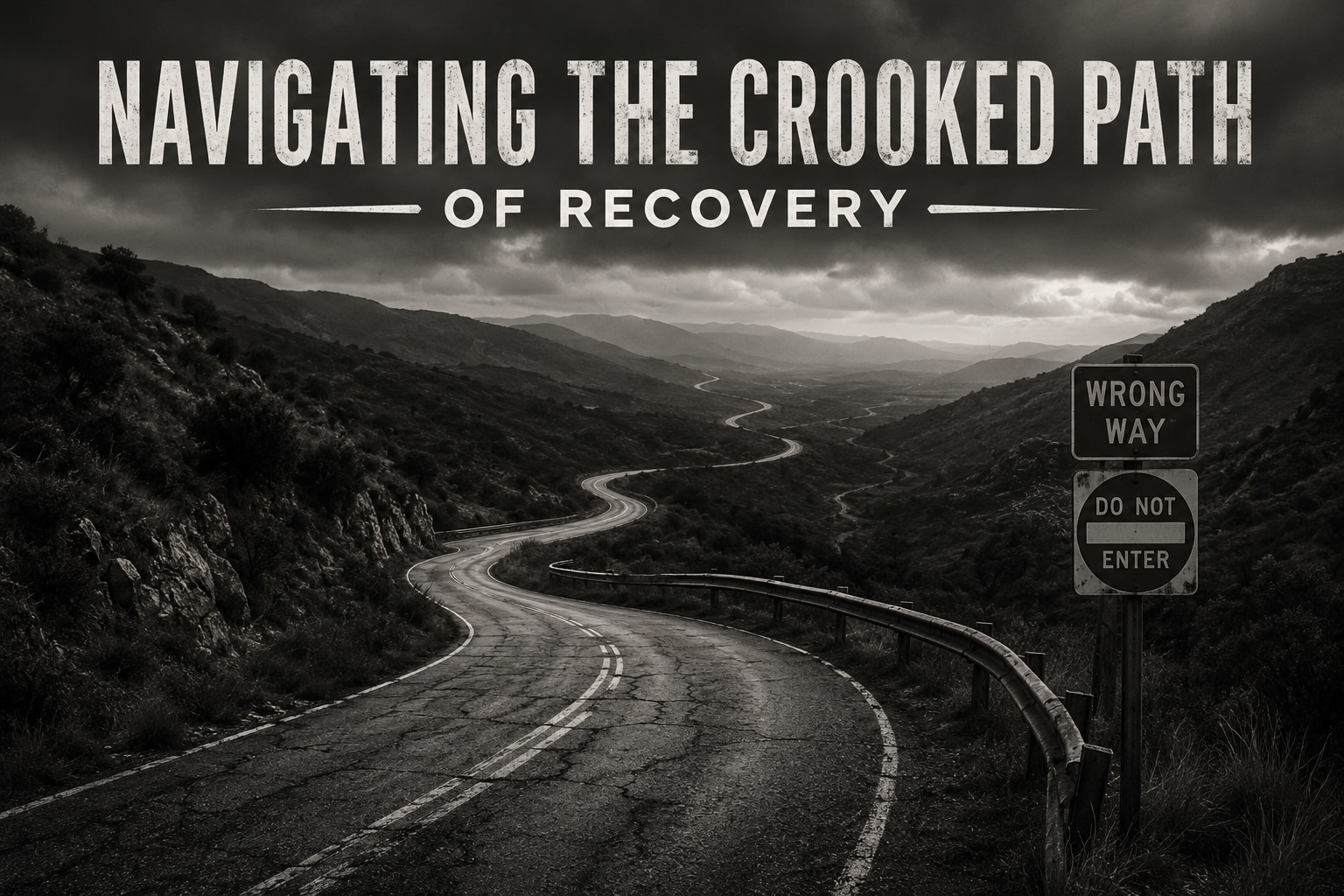
Most people understand that addiction is destructive, but many struggle to understand why recovery is rarely a straight line. It is common knowledge that addiction damages health, relationships, finances, careers, families, and often a person’s sense of self. Addiction does not discriminate.
What many people struggle to understand is why someone continues drinking when the consequences become so severe. From the outside, it can seem simple: “Why don’t they just stop?”
The answer to that question is complicated. For the purposes of this discussion, I’ll skip the science part of it, but if you are interested in learning more about that, I would suggest starting with Narconon’s summary.
For now – let’s just accept the single truth: addiction is rarely simple.
Recovery often requires layers of support, continuous effort, honesty, accountability, and a willingness to continue searching for sobriety through setbacks, failures, and uncertainty.
The reality is that recovery is difficult. Relapse is common. Long-term sobriety often takes far more persistence and support than most people realize.
Recovery Is Rarely A Straight Line
One of the more frustrating aspects of recovery is that it is rarely linear.
People stumble.
They drift.
They relapse.
And people start over.
At True North Sober Support, we choose to see recovery as an opportunity to rediscover who you are, decide who you want to become, and intentionally build a life that aligns with the way you want to see yourself and be seen by others.
Every person’s path is different, but within that search exists the possibility to redefine yourself, develop new purpose, and create a life that feels meaningful, fulfilling, and genuinely your own.
The path exists, but it is unique for everyone, and it takes discipline and effort to develop and execute.
Recovery Statistics Deliver A Difficult Message
It is a hard truth that long-term success rates are not particularly encouraging.
According to the National Institute on Drug Abuse (NIDA), relapse rates for substance use disorders range between 40% and 60%. Those numbers are similar to relapse rates for other chronic illnesses like hypertension, diabetes, and asthma.
Many people require multiple treatment attempts before recovery begins to stabilize.
That statistic can sound discouraging at first, but it also tells an important truth: people struggling with addiction are not uniquely weak or incapable because they relapse.
Recovery is hard. It often involves:
- changing routines
- rebuilding relationships
- managing emotions differently
- learning new coping skills
- separating from unhealthy environments
- creating accountability
- rebuilding trust
- continuing forward after setbacks
Most people do not simply leave treatment and never struggle again.
For many, recovery becomes a process of repeatedly finding their footing and continuing to move forward.
If that reality does not already feel overwhelming enough, there is another difficult truth many people eventually discover: there is no finish line. Recovery is not something you defeat once and never think about again. It is an ongoing commitment to continue searching for the path that allows you to build and maintain a better life.
But Why Is Recovery Rarely A Straight Line?
There are many reasons recovery becomes a winding path, but for this discussion I want to focus on three areas: support systems, environment, and personal approach.
The transition from structured treatment to everyday life is often where recovery becomes most difficult.
Suddenly people are expected to navigate:
- stress
- work
- finances
- loneliness
- relationships
- triggers
- uncertainty
- everyday responsibilities
—all while trying to maintain sobriety.
One of the first things I encourage is the creation of a support system — a network of personal and professional relationships designed to provide encouragement, accountability, and support during difficult moments.
Over time, support systems change. Relationships shift, routines fade, and accountability weakens. When that happens, recovery can become more vulnerable.
Environment also plays a major role in recovery.
A healthy recovery environment supports stability, honesty, accountability, growth, and emotional safety rather than chaos, secrecy, manipulation, or constant triggers. That often means surrounding yourself with positive influences while creating distance from people, places, or routines connected to substance use.
Many people leave highly structured treatment environments and return to isolation, unhealthy relationships, or old habits. Others struggle when recovery becomes stagnant and life loses connection, purpose, or joy. A healthy environment should protect sobriety without becoming emotionally restrictive.
Recovery also requires ongoing evaluation of personal approach.
What works for one person may not work for another. Recovery is often a process of learning, adjusting, failing, growing, and trying again.
Most people do not suddenly abandon recovery all at once.
Instead, small pieces begin to erode over time:
- meetings become less frequent
- routines fade
- honest conversations stop
- accountability weakens
- support systems become distant
Gradually, isolation creates momentum in the wrong direction.
One of the most important things I’ve learned is this: People recover every day.
That mattered because there were times I questioned whether I was capable of changing. I had failed more times than I had succeeded. But I kept returning to the same thought: If other people can do this, then there must be a path forward for me too.
Not a perfect path.
Not an easy path.
But a possible one.
People stumble.
They drift.
They relapse.
And people start over.
Many eventually find a combination of support, accountability, honesty, routine, connection, and willingness that helps them build stability over time.
The road may twist and turn, but that does not mean the road disappears.
How Recovery Coaching And Support Improve Recovery Outcomes
While recovery statistics can feel discouraging, research also shows that ongoing support and accountability improve recovery outcomes.
People who remain connected to support systems after treatment often experience:
- increased engagement in recovery
- improved accountability
- reduced isolation
- stronger community connection
- longer periods of sobriety
- greater consistency in recovery routines
That support can come from many places:
- family
- peer support
- recovery groups
- sponsors
- therapists
- recovery coaches
- sober communities
Recovery coaching is not therapy or clinical treatment. Instead, coaching often focuses on practical day-to-day support during the difficult transition back into normal life.
Sometimes the difference between continued recovery and relapse is not motivation.
Sometimes it is simply having someone there to help you stay connected long enough to regain your footing.
The Road Exists If You’re Willing To Search
Recovery is difficult. But it’s possible. It’s happening everywhere, and every day.
It is emotional, frustrating, exhausting, and deeply personal. There are setbacks. There are wrong turns. People can begin questioning the purpose, the process, and whether change is even possible.
Sometimes it is simply having someone there to help you stay connected long enough to regain your footing. You don’t need answers because you have them already. You just need someone to help, to listen without judgement, and to help clear the path that’s hidden within you.
There are many valid approaches to recovery, but I know of none that involve – simply “winging it”.
Those who are more systematic from the start will likely have more success.
If you’re starting out – don’t be ashamed or afraid to get help. Create a strong support system with people who love you and who you trust. Clean up your environment. Assess where your life is and create goals for your future. Develop a plan to attain those goals. If you do these things and you execute your plan, communicate with your support system, and maintain vigilance over your approach and environment – you will have a much better chance at not only getting and staying sober, but along the way finding the person you aspire to be, and end up living a life you aspire to live.
If you would like help getting, and/or staying sober and would like to talk – please see us at True North Sober Support.
Check out my other articles.

Be the first to comment